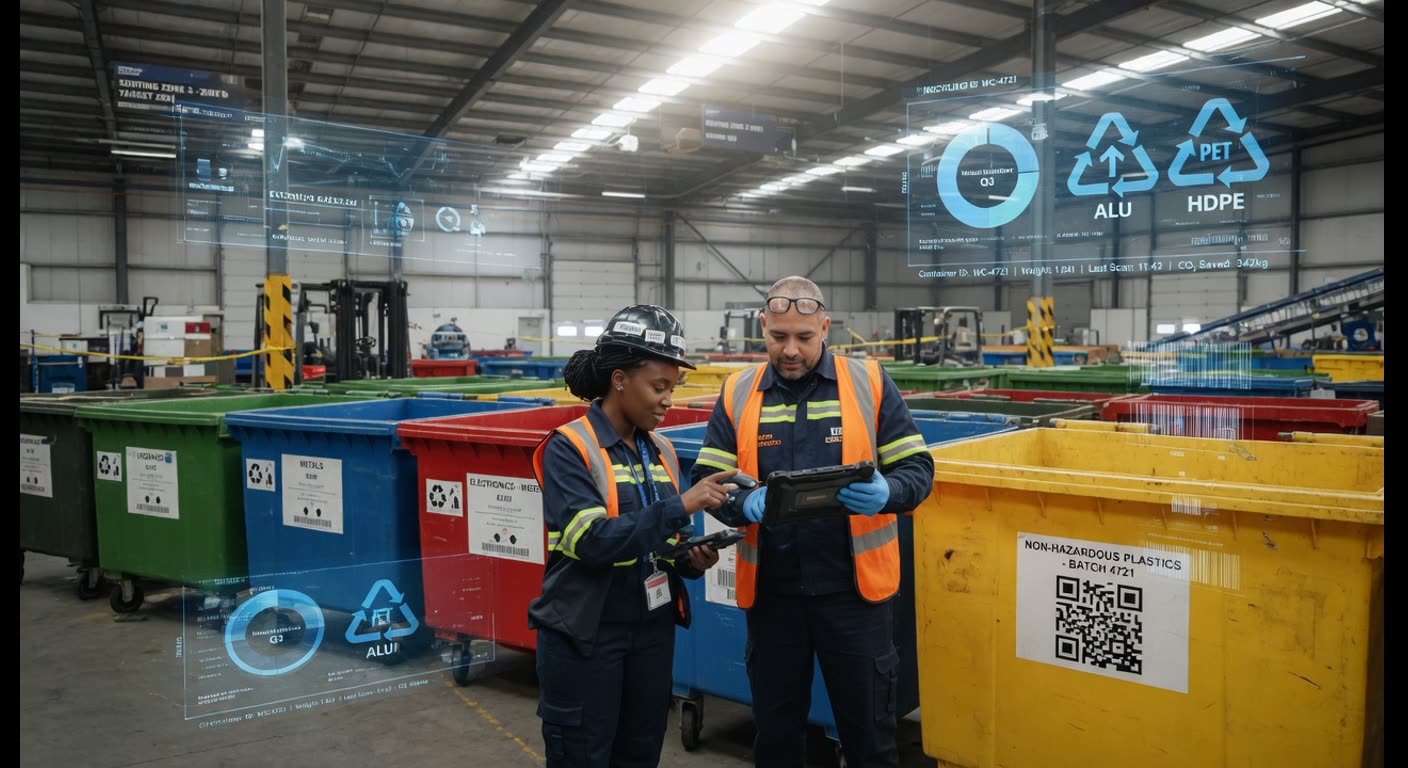
Why 2026 is the year you can't stay on paper
If your workshop or factory generates waste (used oils, solvents, paints, batteries, scrap metal, process plastics …), your waste contractor has probably already notified you: from this year forward, everything is electronic.
It's not optional or a trend. The Law 7/2022 on Waste and Contaminated Soils, as implemented for 2026, has made electronic records mandatory. This means the annual waste report, the chronological log, and identification documents (WID) for every waste transfer must be managed electronically. Paper? They won't accept it.
In fact, according to EU Commission data, 62% of environmental inspections in Spain already include verification of digital records. The trend is that more regions cross-check data automatically between the waste system (e-SIR) and tax authorities to catch inconsistencies.
If you're still tracking waste in Excel, a notebook, or worse yet, trusting your plant manager's memory, this article matters to you.
What exactly changes with the new waste regulations
Let's be concrete. Law 7/2022 isn't new — it was passed in 2022 — but its regulatory implementation for full digitalization has rolled out in phases. 2026 is when all the pieces are active.
Here's what changes for your company:
1. Electronic annual waste report (mandatory)
Before you could submit a paper summary or PDF. Now you must upload data to your region's electronic system (or the national e-SIR) with detailed information: quantities, waste type, final destination, treatment facility. The deadline is typically March 1 of the following year.
2. Electronic Waste Identification Document (WID)
Paper doesn't work anymore on transfers. Every time a truck leaves your plant with waste, the WID must be logged electronically before the shipment moves. The treatment facility confirms receipt. Without electronic registration, the transfer is illegal.
3. Digitalized chronological log
You must maintain an up-to-date, near real-time record of all operations: what waste is generated, how much, when it's removed, who manages it. The authorities can check it anytime, without warning.
If that sounds like bureaucracy, you're right. But the alternative is worse.
"Not digitalizing waste management isn't just a financial risk: in 2026, it's directly illegal. And authorities are starting to cross-check data automatically."
BigLobster Legal and Compliance TeamHow to digitalize waste management: step-by-step for industrial SMBs
OK, you know you have to do it. But you're probably wondering: where do I start without hiring a full-time environmental engineer?
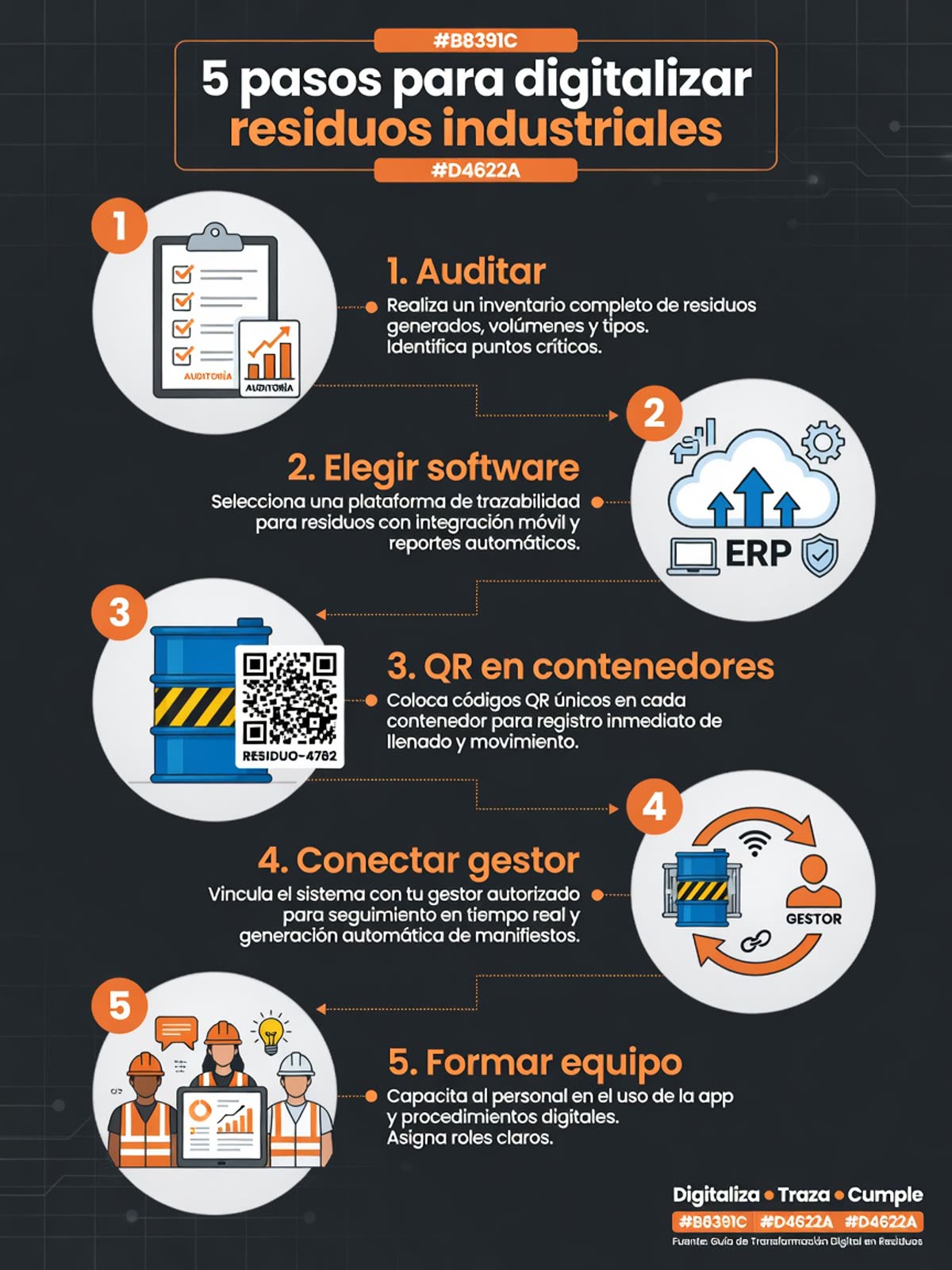
The good news: digitizing your workshop or factory's waste is simpler than you think if you do it in phases. Here's the plan:
Step 1: Audit what you have now (1–2 days)
Before buying anything, review what waste you generate, in what quantities, how often your contractor picks it up, and how you're currently recording it. The first step is probably moving from paper notebooks/cards to an organized spreadsheet. That sheet becomes the base for your digital system.
Make a list of the European Waste Codes (EWC) for each waste type. If you don't have them, your waste contractor is legally required to provide them.
Step 2: Choose a digital registration system (1–2 weeks)
There are several options depending on company size:
| Solution | For whom | Approximate cost |
|---|---|---|
| Direct regional platform | Micro-businesses (under 5 employees, minimal waste) | Free (government provides it) |
| Cloud-based waste management software | SMBs with 5–50 employees | €50–300/month |
| ERP with waste module | SMBs with 20+ employees with ERP already running | €1,500–5,000 (license + integration) |
| Custom solution with IoT + QR | Industries with multiple generation points | €3,000–15,000 (hardware + software) |
For most industrial SMBs in Galicia, cloud-based software that connects to your region's e-SIR system is the smartest move. No server installation needed, set up in days, usable from a tablet or phone on the plant floor.
Step 3: Put QR codes on containers (1 week)
This is the key to cheap digitalization. Instead of the operator filling out paper every time waste goes into a container, you stick a QR code on each one. Scan it with a phone or tablet and the system knows the waste type, records the quantity and date, and automatically generates the WID when the contractor picks it up.
QR code printing costs next to nothing. A rugged plant-floor tablet runs €300–600. Software starts at €50/month.
Step 4: Connect with your waste contractor (1 week)
Your contractor should already be digitalized (if not, switch). Ask them to give you access to their platform or confirm what system they use so you can integrate data. Most major contractors already work with systems connected directly to regional e-SIR.
Step 5: Train your team and test (2 weeks)
The most important part, and the one most often skipped. The plant operator who disposes of waste needs to understand that each QR scan is a digital event the government can audit. A two-hour training session usually gets the system running without errors.
Do a 15-day trial: log all movements, generate your first electronic WIDs, and check that the annual report auto-generates correctly. If it works, you're done. If you spot errors, fix them before an inspection shows up.
Public grants that pay for waste digitalization
Here's what most people don't know: there are public grants covering up to 70% of what it costs to digitalize your waste management.
It's not theory. These are active 2026 programs you can apply for as an industrial SMB in Galicia:
- Digital Kit (Spanish Government): grants of €2,000 to €12,000 for SMB digitalization. Includes categories like process management, e-invoicing, and ERP. If your waste software integrates with your overall management, it qualifies.
- IG300C (Xunta de Galicia): the grant line for digital transformation of Galician industrial SMBs. Covers environmental management tools, process digitalization, and traceability systems.
- Industry 4.0 Active (CDTI): financing for industrial digitalization projects including sensors, IoT, and management software. Waste fits as part of the production process.
- R&D+i tax deductions: investments in environmental management software and digital traceability systems can qualify for corporate tax deductions. Check with your accountant.
In total, a 10–20 person industrial SMB can cover 50–70% of the investment by combining Digital Kit grants with regional programs. Your actual out-of-pocket cost drops to €500–2,000 in many cases.
What happens if you don't digitalize (spoiler: it's more than the fine)
Sure, the penalties matter. But three consequences of not digitalizing waste management hurt more than the fines:
1. You get locked out of supply chains. Large companies like Mercadona, Inditex, and Iberdrola already demand digital environmental traceability from their industrial suppliers. Without proof of electronic waste management, you fail supplier approval. That's exactly what we cover in our article on becoming a supplier for large companies.
2. The government cross-checks data automatically. The e-SIR system compares your waste declaration against your raw material consumption, your e-invoices, and your VAT reports. Any mismatch triggers an alert. You don't need an inspection — the system flags you on its own.
3. You lose money. Paper-based waste tracking means you have no data to optimize. Do you know how much waste you actually generate per month? What you pay per ton? Could you cut costs by separating better? Without data, you can't improve. With data, industrial SMBs typically cut waste management costs 15–30% in year one.
Frequently asked questions
What waste digitalization obligations do I have as an industrial SMB in 2026?
You must submit an electronic annual waste report, maintain a digitalized chronological log, and manage Waste Identification Documents (WIDs) electronically through e-SIR or your regional platform. Everything without paper, with real-time records.
What penalties are there for not digitalizing waste management?
Violations of Law 7/2022 carry fines from €900 to €1,750,000 depending on severity. Minor violations: €900–45,000. Serious violations: €45,001–300,000. Very serious violations: up to €1,750,000. Plus, lack of traceability can block your plant operations or prevent you from qualifying as a major-company supplier.
How can I digitalize waste management without spending a fortune?
Start with a basic digital registration system using tablets or phones with QR codes, combined with cloud-based waste management software. Initial cost for a small SMB can be €500–2,000. Plus, Digital Kit and regional programs like Galicia's IG300C cover up to 70% of the investment.
Which companies must keep an electronic waste record?
Any company generating more than 1,000 tons of non-hazardous waste annually, or any amount of hazardous waste, must comply. In practice, most industrial SMBs (workshops, factories, manufacturers) generating hazardous waste like oils, solvents, paints, or batteries fall under this obligation, regardless of quantity.
Can I use Excel for the electronic record?
No, Excel alone isn't enough. The law requires a system that allows direct upload to e-SIR or the regional platform, with traceability and digital signature. Excel can help you organize data initially, but you need software connected to the government system to generate WIDs and your annual report.
Can my waste contractor handle everything?
Partially. Your contractor can help with transfer WIDs and the annual report, but you as the producer are ultimately responsible for data accuracy and timeliness. The law is clear: the producer is responsible for waste until final treatment. You can't delegate and forget.
Need help digitalizing your waste management?
We help you set up a digital waste recording system tailored to your industry, connected to the government, and hassle-free. Fixed pricing, no surprises.
Request information →