The problem isn't money. It's that there's nobody to lead
When an industrial business in Galicia fails to find a successor, the most repeated explanation in the manufacturing districts isn't "it doesn't generate enough income." It's something more uncomfortable: "only my father knows how to run this."
That sentence, though painful, gets to the root of it. 92.4% of Galician companies are family-owned, according to the Spanish Family Business Institute. Not 50% or 60%: 92.4%. And the vast majority of those—67.4%—are micro-companies with fewer than 10 employees. These aren't corporations with boards of directors. They're one person and their family's livelihood.
Here's the headline statistic: only one in three family businesses survives the first succession. The other two either shut down or survive on borrowed time.
I'll say this plainly, because almost nobody mentions it: succession fails not because of money, but because of management. Most of these companies are profitable. The problem is they're not manageable by anyone other than the founder.
What does digitalization have to do with this? Everything
This is where what we do at BigLobster connects—not as sales talk, but as an observation we make every week in the manufacturing districts of Ourense, Vigo, and Ferrol.
A company where the owner keeps the accounts in his head, pricing in a notebook, and orders in his memory is not a business. It's a family secret. No outsider—not your son, not a buyer, not a hired manager—can walk in and lead it, because the "management system" isn't written anywhere. It lives inside one person's mind.
Digitalization isn't a fad or a luxury for tech enthusiasts. It's what turns that private knowledge into a process anyone can follow. When customer data, orders, margins, and costs live in a system (even a simple one), the company stops depending on one person and starts depending on a method. And a method can be inherited, sold, or handed over.
"A family business doesn't get transferred by a notary's signature. It gets transferred when it stops depending on the founder's brain. Digitalization is what makes that transfer possible."
BigLobster Automation TeamWhat's happening right now in Galicia
This isn't theoretical or decades away. It's happening now. According to Xunta figures, there are currently almost 160 active businesses in Galicia looking for someone to take them over, listed on the Remuda Registry: 48 in A Coruña, 42 in Pontevedra, 36 in Lugo, and 32 in Ourense.
And this comes with a name: the Remuda Bonus. It's a Xunta grant that covers up to 75% of the cost of transferring an operating business, with a maximum of 30,000 euros. If you're the one retiring and handing over the business, you can claim an additional 3,000 to 6,000 euros depending on your municipality.
Here's the statistic that should make you think: in two years, the Remuda Bonus saved just over one hundred businesses from closing. And you know how many are still looking for a successor? Nearly 160. That means for every two businesses that find a handover, almost three don't and end up hoping for luck.
And note this: the challenge in inland areas is even tougher. 75% of successful handovers cluster in the Atlantic corridor (A Coruña and Pontevedra). In Ourense, for example, barely 8 handovers were formalized with grant support last year. It's not that there aren't viable businesses. It's harder to find the right person and harder to make the business manageable by an outsider.
Here's the part almost nobody looks at when reading these numbers: the businesses that handover best aren't the biggest ones. They're the most organized ones. The ones with accessible information, documented processes, and automated repetitive tasks.
The trap of the one-person-dependent business (and how to break it)
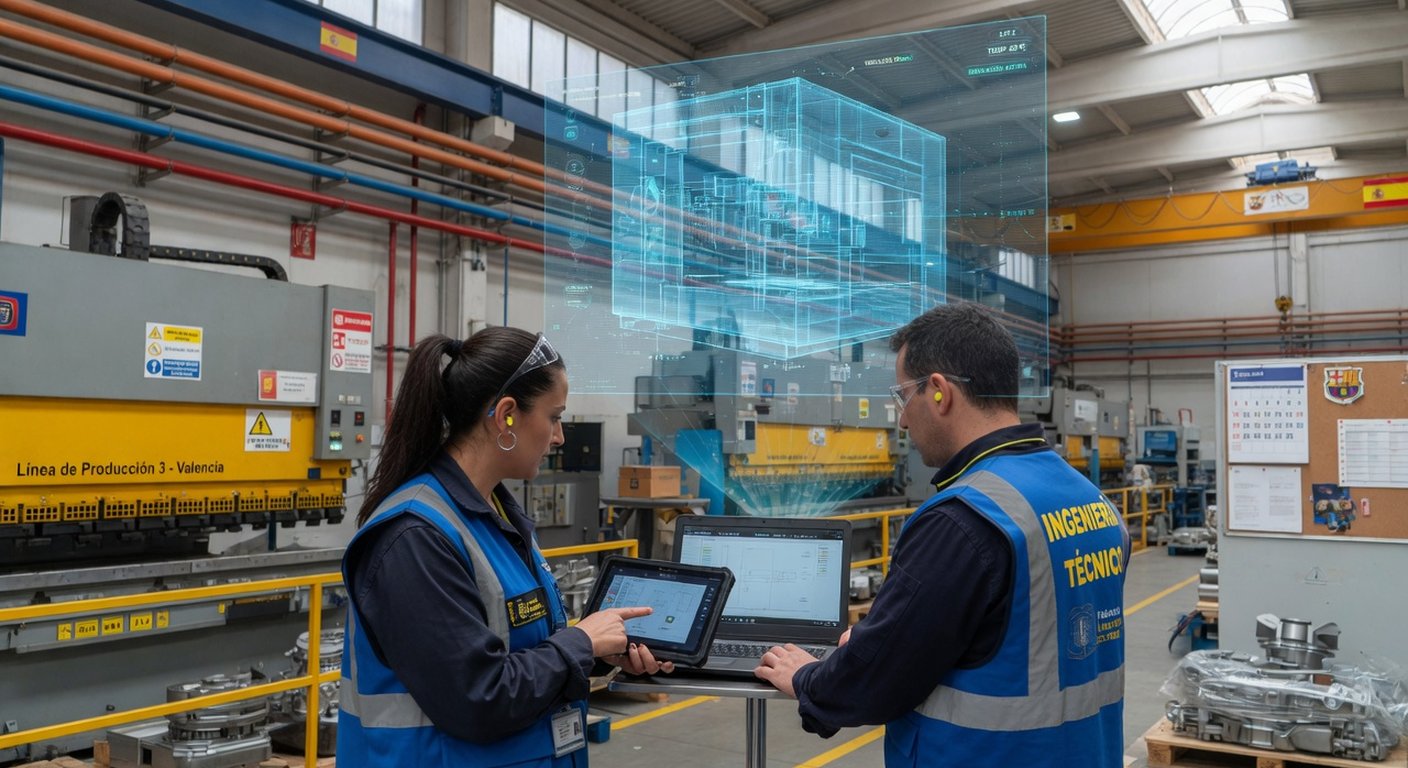
Let me give you the most typical case we see. A machine shop with 12 employees. The owner is 62, started it at 25, and knows everything: which customers call every Tuesday, which machine is about to fail, which supplier delivers late, and what the real margin is on every job. All in his head.
His son is 34, an engineer, and has been saying for five years he wants to take charge. What happens? He can't. Every time he tries to make a decision, he hits the wall: "we've always done it this way because I run it this way." No data, no documented process, no way to prove what works and what doesn't. Knowledge hasn't been passed on. It's been locked away.
This pattern repeats across dozens of Galician industrial companies, and it has three telltale symptoms:
- The numbers live in the owner's head. There's no dashboard anyone can read. If the owner is gone for a week, nobody knows how much the company actually makes.
- Critical tasks depend on one person. An administrator who "knows everything," a production manager who's the only one who understands CNC programming. If that person leaves, operations wobble.
- Invoicing and orders are managed by hand. Scattered emails, WhatsApp, spreadsheets with 500 tabs. Impossible for someone else to take over without hand-holding for a year.
Breaking this trap doesn't take a six-month project with 50,000-euro consulting fees. It takes, above all, a decision. The decision to stop being essential before retirement.
What to digitalize first so your business is handover-ready
If you're facing succession soon (or think it might come up), don't try to digitalize everything at once. You'll drown. Follow this order—it's what works:
Make company information accessible
Get customer data, orders, suppliers, margins, and costs into a system (a CRM or an ERP scaled to your size)—not in folders or heads. Here's a good guide if you're choosing: comparison of ERPs for industrial SMBs. With this in place, anyone walking in can understand how the business is doing in an afternoon.
Automate repetitive processes
Invoicing, payment reminders, maintenance alerts, work orders that are filled out by hand today. All automatable without needing a tech team. Each manual task you eliminate is one nobody has to remember to do. A good starting point is our list of processes you can automate without code.
Connect the shop floor
In manufacturing, the biggest succession risk is that know-how walks out the door with the person who controls production. When production gets logged, measured, and visible (using a digital work order system, for example), the expertise doesn't disappear. For details, read about digital work orders for industrial SMBs.
The countdown nobody teaches you
I'm going to give you a number that usually makes people uncomfortable, because most SMBs haven't calculated it. According to Xunta employment data, the new generation of Galician business owners retires on average around age 65. If you're 57 with a business that depends on you, you have eight years to make it handover-ready.
Eight years sounds like a lot until you review what's involved: digitalize, automate, train the next generation, and keep the company running the whole time. That's a lot.
There's a timing trap we see all the time: people start digitalizing when they've already decided to sell or retire—foot on the gas, racing the clock. That's the worst moment. The ideal time is three, four, or five years before, when the company is still doing well and you can organize it calmly. Digitalization done with time and breathing room is cheaper and, most importantly, better.
Instead of waiting for the notary to set your date, start when the company doesn't need you to survive. That way, when the time comes, you're not "selling a business." You're handing over a company that runs itself.
Frequently asked questions
What if my kids don't want to take over the business?
There's still plenty you can do. Handover doesn't have to be family. A digitalized, automated business can be sold to an external buyer, transferred to a trusted longtime employee, or run by a hired manager. In fact, the smoothest handovers in Galicia aren't the ones run by relatives. They're the ones that don't depend on a name—they depend on a system. Digitalization is what makes that possible.
Is digitalization worth it if I'm planning to close anyway?
Flip the question: would you close before trying to sell or hand over a profitable business? Most of these companies make money. What fails is the management. An organized business with clear numbers multiplies its chances of finding a buyer—and getting paid more. Even if you use the Remuda Bonus to transfer it, presenting it with clean data and documented processes gives you much more leverage.
How much does it cost to digitalize an industrial SMB for succession?
It varies widely. A simple ERP scaled to your SMB, a CRM, and automating basic office processes can run 3,000 to 12,000 euros depending on size and integrations. Shop-floor work (connectivity, sensors, digital work orders) adds cost. But compare it to the alternative: a business you can't hand over is usually worth zero when you retire. Digitalization isn't an expense. It's what puts a price on your company.
How long does it take to get a company ready to hand over?
With a solid plan and production running the whole time, most industrial SMBs get the office side digitalized and automated in 3 to 6 months. The shop-floor side, depending on what needs connecting, can take longer. Starting early is key: the sooner you organize, the smoother (and cheaper) the transition.
Can I use the Remuda Bonus to digitalize before handing over?
The Remuda Bonus covers the cost of transfer (up to 75% with a 30,000-euro cap) and as of last year includes grants for the retiring owner. It's not primarily a digitalization subsidy—that comes through other programs like Igape's digital transformation grants for SMBs. What is true: having a digitalized business makes you much more attractive on the Remuda Registry.
Want your company to survive your retirement?
We help you organize and automate your industrial SMB so it stops depending on one person: clear data, documented processes, and automated repetitive work. No endless consulting—just the order that actually matters for succession.
Let's talk →